Stair Runner Installation Cost in Calgary: Pricing, Materials and Options
If you’re pricing a stair runner in Calgary, a reasonable starting point for a standard 13- to 14-step straight staircase is about $1,300 to $1,500. The final number can move quite a bit depending on the runner you choose, the width of the carpet, padding, the condition of the stairs, and how complicated the installation is.
A basic synthetic runner will usually cost less than wool. Stairs with winders, landings, curves, or difficult access can also take more time to install, which adds to the labour cost. Removing an existing carpet is another expense to account for.
The prices below are useful for budgeting, but they aren’t a substitute for an on-site measurement and quote. The runner itself can also make a surprisingly large difference.
Quick Price Guide
| Stair runner option | Typical planning range |
|---|---|
| Standard 13-14 step staircase | $1,283-$1,485 |
| Synthetic runner | $1,100-$1,275 |
| Nylon runner | $1,250-$1,450 |
| Berber or loop-pile runner | $1,425-$1,650 |
| Wool or wool-blend runner | $1,750-$2,050+ |
| Existing carpet removal | About $100-$300 |
| Straightforward installation | About 3-5 hours |
These numbers are best treated as planning figures. The price of the actual runner, the shape of the staircase, and the work required to prepare it will determine the final quote.
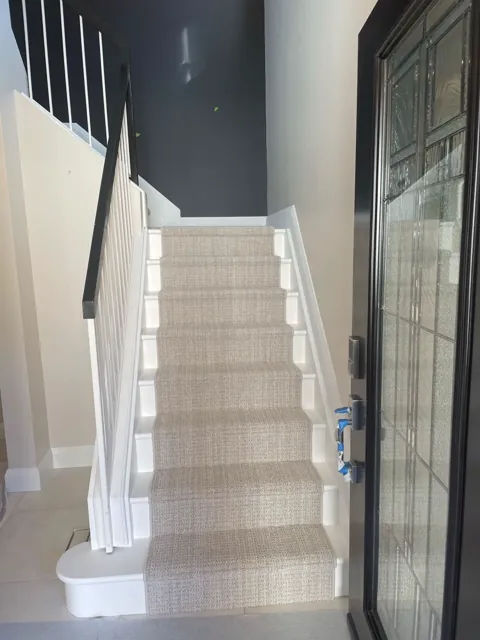
What Affects the Cost of a Stair Runner?
There isn’t one fixed price per staircase because every set of stairs is a little different. The biggest variables are the number of steps, the layout, the carpet itself, and the amount of preparation required.
1. Number and shape of the stairs
A straight staircase is generally the easiest job to price and install.
Winders, curves and landings require more cutting and careful fitting. If the runner has a noticeable pattern, the installer may also need to spend extra time positioning it so the pattern looks consistent from one step to the next.
For that reason, a 13-step straight staircase and a 17-step staircase with winders shouldn’t be expected to cost the same.
2. The runner you choose
The carpet is often one of the biggest differences between a lower-priced and higher-priced installation.
Synthetic runners are generally the more economical choice. Nylon is popular for stairs that see a lot of traffic, while wool and wool blends tend to sit at the premium end.
It’s worth looking beyond the fibre name, though. Two nylon runners can have very different prices because of their construction, density, pattern and overall quality.
3. Runner width
The wider the runner, the more material is required.
A narrower runner leaves more of the stair tread exposed on either side, which can create a more traditional look on finished hardwood stairs. A wider runner gives more coverage and can make sense when the stairs need additional protection.
The width should be decided before ordering the carpet because it affects both the amount of material required and the finished appearance.
4. Access to the staircase
Installation is easier when the stairs are open and easy to work around.
Tight spaces, walls close to the staircase, spindles, trim and other obstacles can slow the job down. If anything needs to be removed and put back afterward, such as certain pieces of trim, that should be included in the quote.
5. Removing existing carpet
If you’re replacing an existing carpeted staircase, there is usually some preparation before the new runner can go in.
That may include removing:
- The old carpet
- Padding
- Staples
- Tack strips, where applicable
- Leftover adhesive or debris
The installer may also need to clean up or repair the surface underneath. Removal and disposal are worth asking about because they aren’t necessarily included in an installation-only price.
Example Stair Runner Prices
For budgeting a typical 13- to 14-step straight staircase, these figures give a reasonable idea of how the material choice can affect the total.
Synthetic runner
Around $1,200 on average, with a planning range of approximately $1,140-$1,320.
Synthetic runners are usually the least expensive option. They’re worth considering for a basement or secondary staircase, or simply when keeping the overall project cost down is the priority.
There are plenty of different synthetic products, so the cheapest option isn’t necessarily the best one for a busy staircase.
Nylon runner
Around $1,350 on average, with a typical range of approximately $1,283-$1,485.
Nylon is a practical choice for a main staircase that gets regular use. It offers a middle ground between a basic synthetic product and higher-end natural-fibre runners.
The quality of the particular runner still matters more than the label “nylon” by itself.
Berber or loop-pile runner
Around $1,500 on average, with a planning range of approximately $1,425-$1,650.
Berber describes a style of carpet construction rather than one specific fibre. A loop-pile runner can be made from different materials, so prices vary accordingly.
If you’re considering a loop-pile product for stairs, it’s worth asking the installer whether the particular carpet is suitable for stair use.
Wool or wool-blend runner
Around $1,900 on average, with a planning range of approximately $1,805-$2,090.
Wool is generally a premium choice and can make sense on a main staircase where appearance and long-term use matter more than keeping the initial cost low.
High-end wool runners can go beyond this range, particularly when they have elaborate patterns or come from premium manufacturers.
What Should Be Included in the Quote?
When comparing prices from different installers, make sure you’re comparing the same scope of work.
A written quote should make it clear whether the price includes:
- The runner
- Padding
- Installation
- Tack strips or other installation materials
- Removal of existing carpet
- Disposal
- Surface preparation
- Repairs to the stairs
- Pattern matching or additional seams
- Removal and replacement of trim
- Taxes
This matters because a lower quote isn’t necessarily cheaper once the missing items are added.
For example, one installer might quote $1,100 for installation and carpet while another quotes $1,400 including padding, removal and disposal. Those aren’t really comparable prices.
Do You Need New Stair Padding?
Not every staircase needs the same type of padding.
The right product depends on the runner, the installation method and the manufacturer’s requirements. If you’re replacing an existing runner, the installer should inspect the old padding rather than automatically assuming it can be reused.
If new padding is required, ask what product is being used and whether it is already included in the quote. This is a small detail, but it can prevent an unexpected extra charge later.
Stair Runner vs. Full Carpet
A runner covers the centre of the stairs while leaving some of the tread visible at the sides. Full carpeting covers substantially more of the staircase.
| Stair Runner | Full Carpet | |
|---|---|---|
| Carpet required | Less | More |
| Hardwood visible | Usually yes | Usually no |
| Overall look | Shows the stair material | Fully carpeted |
| Typical material cost | Lower | Higher |
| Good choice for | Finished hardwood stairs | Stairs needing broader coverage |
A runner is particularly appealing when the existing hardwood is in good condition. You get carpet where you need it while still keeping some of the wood visible.
On the other hand, if the stairs underneath the existing carpet are unfinished or badly damaged, a runner may not hide enough of the problem. In that situation, full carpeting could be the more practical option.
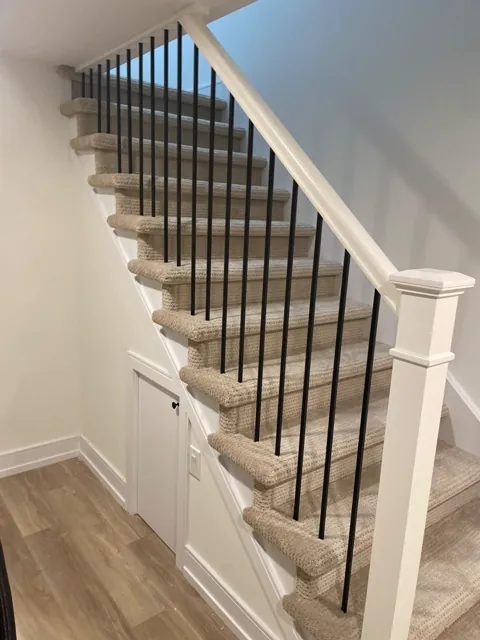
How Stair Design Can Increase the Price
A straight staircase is the easiest baseline for estimating the job. Costs can rise when the staircase includes:
- Winders
- Curved sections
- Landings
- Uneven or unusual tread dimensions
- Tight access
- Decorative borders
- Directional patterns
- Pattern matching
- Damaged hardwood
- Extensive carpet removal
- Repairs or other preparation
This is why an installer should measure the staircase before giving you a firm price.
A photograph is useful for an initial discussion, but it won’t show everything that can affect the job. Tread depth, stair geometry, the condition of the surface and access can all change the amount of work involved.
How Long Does Stair Runner Installation Take?
For a straightforward 13-step staircase, installation can often take around 3-5 hours.
That’s only a rough guide. Removing an old carpet, dealing with winders or curves, matching a pattern, repairing the stairs or handling difficult access can add considerably to the installation time.
An installer should be able to give you a better estimate after seeing the staircase.
What About Basement Stairs?
Being in a basement doesn’t automatically make a staircase cheaper to carpet.
The same basic factors still apply: number of stairs, staircase layout, runner choice, access and the condition of the existing surface.
That said, homeowners often choose a more affordable synthetic runner for basement stairs, particularly when the staircase is secondary to the main living areas.
If the basement stairs are used several times a day, durability is still worth considering. Saving money on the runner doesn’t help much if it needs to be replaced sooner than expected.
Choosing a Runner for a Calgary Home
Think about how the stairs are actually used before choosing the carpet.
A busy staircase benefits from a runner that can handle regular foot traffic and won’t make every bit of dirt obvious. Mid-tone or patterned runners can be practical in homes where people regularly come in from outside with shoes.
For a more formal staircase, a wool or wool-blend runner may be worth considering for its appearance and feel.
A basement or secondary staircase usually doesn’t require the same level of finish, making a good-quality synthetic runner a sensible way to keep the project affordable.
There isn’t one “best” runner. Traffic, appearance, maintenance and budget all matter.
How to Get an Accurate Price
The most reliable way to price a stair runner is to have the staircase measured in person.
The installer should check:
- The number of stairs
- Tread and riser dimensions
- Whether the staircase is straight, curved, or has winders or landings
- The desired runner width
- The specific runner being used
- Padding requirements
- The condition of the existing stairs
- Whether old carpet needs to be removed
- Access around trim and railings
- Disposal requirements
Once those details are known, you can get a quote based on your actual staircase instead of relying on a generic price per step.
Frequently Asked Questions
How much does it cost to install a stair runner in Calgary?
For budgeting purposes, a standard 13- to 14-step straight staircase is roughly $1,283-$1,485 for a mid-range installation. Basic synthetic options may cost less, while premium wool runners can push the price above $2,000.
Is a stair runner cheaper than full stair carpeting?
Usually. A runner uses less carpet because it covers only the centre portion of the staircase. The actual difference depends on the carpet, installation method and condition of the stairs.
Can a runner be installed over hardwood stairs?
Yes. Stair runners are commonly installed over finished hardwood. If protecting the hardwood is important, discuss the installation and fastening method with the installer before work begins.
Do I need to remove existing carpet before installing a new runner?
Usually, yes. Existing carpet and padding will normally have to come out before the new runner is installed. The installer can then determine whether anything underneath also needs to be removed or repaired.
How long does stair runner installation take?
A straightforward staircase can often be completed in about 3-5 hours. More complicated installations or jobs involving removal and preparation can take longer.
What type of runner lasts the longest?
Nylon and wool can both be durable choices. However, the actual construction and quality of the runner, how well it is installed, and the amount of traffic it receives all affect how long it lasts.
It’s better to compare specific products than to choose solely by fibre type.
Is wool worth the extra cost?
It can be for homeowners who want a higher-end finish and plan to keep the runner for a long time. If the priority is keeping the project affordable, a good synthetic or nylon runner may offer better value.
Why are two stair-runner quotes sometimes so different?
The installers may be quoting different products or different scopes of work. Check whether each price includes the runner, padding, installation, removal, disposal, preparation and any finishing work before comparing the totals.
Getting a Stair Runner Quote
The best starting point is to have the staircase measured and then choose the runner you actually want.
For a rough budget, the ranges above should give you an idea of what to expect. Once the staircase has been measured, ask for a written quote that separates the runner, padding, installation, removal and any preparation or repair work.
That makes it much easier to compare quotes and understand what you’re actually paying for.