Carpet Stretching Cost in Calgary: When to Stretch, Repair, or Replace

Loose carpet is more than a cosmetic problem. Ripples and buckles can become trip hazards, wear faster than the surrounding carpet, and sometimes point to installation or moisture issues.
If your carpet is still in good condition, stretching may be enough to restore a flat surface. If there are damaged seams, tears, wet padding, or deteriorated backing, the job may require repair or replacement instead.

How Much Does Carpet Stretching Cost?
Published North American cost guides generally place professional carpet stretching at about $100 to $300 per room, with some projects priced around $0.50 to $1.50 per square foot.
These figures are useful for budgeting, but they should not be treated as Calgary-specific averages. Local contractors may price the work differently based on the size and condition of the carpet, furniture, access, and the amount of repair work involved.
A small bedroom is not always inexpensive simply because it has less square footage. Contractors may have a minimum service charge that covers travel, setup, inspection, equipment, and finishing.
For that reason, a better question than “What do you charge per room?” is:
What is included in the quote, and what could cause the price to change?
What Affects the Price?
The visible ripple is only one part of the job. A contractor may also need to consider:
- Room size and layout
- Amount of furniture that must be moved
- Connected rooms and hallways
- Doorway seams
- Closets and irregular wall lines
- Condition of the tack strip
- Carpet construction
- Previous stretching or repairs
- Pad or subfloor problems
- Condo parking, elevator access, or restricted working hours
A lightly furnished 12-by-12 bedroom may be straightforward. A similar-sized living room connected to a hallway through several seams can require considerably more work.
When Does Carpet Need Stretching?
Stretching is appropriate when the carpet has lost tension but is otherwise in serviceable condition.
Common signs include:
- Ripples or waves
- Buckling
- Loose areas that shift underfoot
- Wrinkles near walls or doorways
- Loose perimeter areas
Proper stretch-in carpet installation uses a power stretcher to create and maintain tension. The Carpet and Rug Institute includes power stretching in its installation standards because inadequate tension can contribute to wrinkling and rippling.
However, a wrinkle does not automatically mean stretching is the only repair needed. Before applying tension, the contractor should check the backing, seams, tack strip, pad, and any history of moisture or previous repairs.
Stretching, Repair, or Replacement?
The right option depends on the condition of the carpet.
Stretching
Stretching makes sense when the carpet is still structurally sound and the main problem is looseness.
Typical examples include:
- Ripples across an otherwise good carpet
- Loose perimeter areas
- Buckling caused by loss of tension
- Wrinkles that developed after installation or over time
Repair
Localized damage often calls for repair rather than full replacement.
Examples include:
- Open or damaged seams
- Small burns
- Tears
- Snags
- Patchable pet damage
- Damaged carpet loops
Stretching and repair are sometimes completed during the same visit. A room may need to be retensioned while a weak doorway seam is repaired at the same time.
Replacement
Replacement becomes more practical when the carpet itself is failing.
That may include:
- Brittle or separating backing
- Widespread deterioration
- Extensive contamination
- Carpet that can no longer hold tension
- Repeated problems caused by underlying material failure
Age alone is not enough to make the decision. Condition matters more.
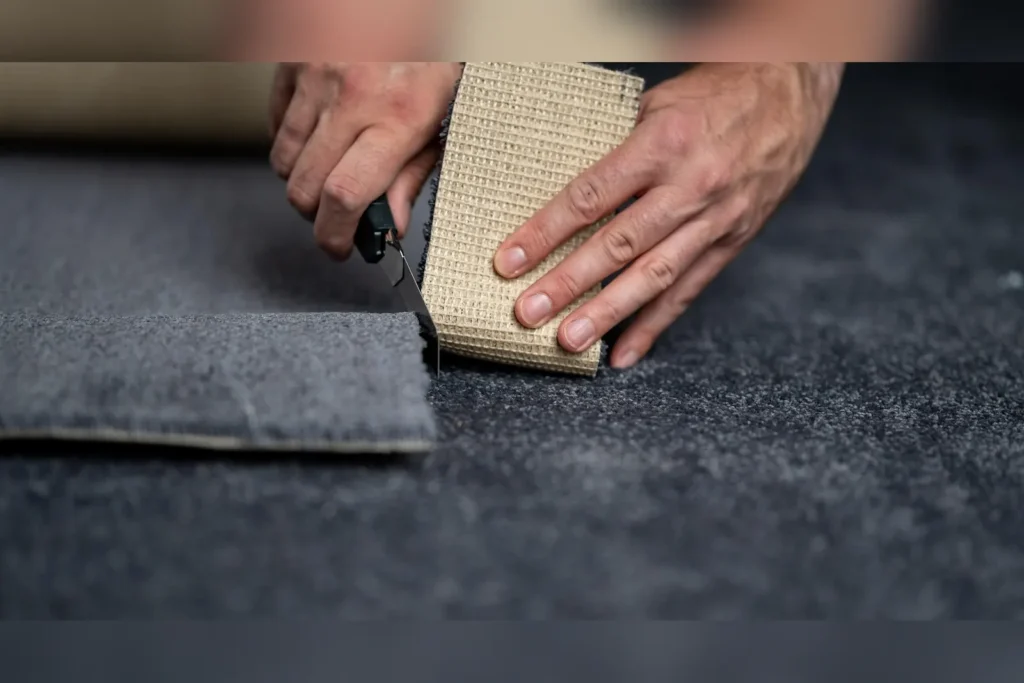
How Professional Carpet Stretching Works
Carpet stretching is not simply a matter of pushing a wrinkle toward the wall.
A typical job involves:
- Inspecting the loose areas and surrounding carpet
- Checking seams, edges, backing, and tack strips
- Clearing enough space to work across the room
- Releasing the carpet from selected perimeter areas
- Applying controlled tension with a power stretcher
- Securing the carpet back onto the tack strip
- Trimming excess material if necessary
- Tucking and finishing the edges
- Checking seams and transitions
A knee kicker may be used for positioning and perimeter work, but it is not a substitute for a power stretcher when significant retensioning is required.
Will Stretching Remove Every Crease?
Not always.
If a carpet has been sharply buckled for a long time, the raised area may have worn differently from the surrounding fibres. Stretching can remove the looseness while leaving a faint line where the ridge used to be.
The final appearance depends on factors such as:
- Carpet construction
- Backing condition
- Severity of the buckle
- Wear along the raised section
- How long the problem has existed
- Previous stretching or repairs
A contractor should discuss this before starting work if the carpet has been badly wrinkled for an extended period.
Does the Furniture Need to Be Removed?
The technician needs a clear working path across the carpet, but that does not always mean completely emptying the room.
Homeowners are usually better off removing small and fragile items such as electronics, lamps, boxes, cables, and breakables before the appointment.
Policies for larger furniture vary. Ask specifically about beds, dressers, cabinets, adjustable bed frames, pianos, aquariums, safes, and large entertainment units.
Some contractors will reposition ordinary furniture during the job. Others expect the room to be mostly clear. Make sure the quote explains what is included.
Seams, Hallways, and Connected Rooms
Carpet often continues through doorways and into adjoining areas. That matters because tension applied in one section can affect another.
Tell the contractor if:
- A ripple crosses a doorway
- Several connected rooms are loose
- A doorway seam is opening
- A closet is part of the same carpeted area
- The carpet has been stretched before
These details help determine how much carpet must be released and whether seam work should be included in the estimate.
Basement Carpet Requires Extra Attention
Loose basement carpet should be checked for moisture problems before stretching.
Stretching can correct loss of tension. It cannot correct an active leak, wet padding, or ongoing moisture intrusion.
If the carpet or pad has been wet, determine the cause first. Depending on the extent of the damage, the project may require drying, cleaning, pad replacement, repair, or full replacement.
Treating the wrinkle without addressing the moisture problem can leave the underlying issue unresolved.
Carpet Cleaning Will Not Fix Loose Carpet
Cleaning and stretching serve different purposes.
Carpet cleaning removes soil and stains. Carpet stretching restores tension.
Cleaning will not tighten a loose carpet, and stretching will not restore worn fibres or correct contamination in the pad or subfloor.
If both problems are present, they should be assessed separately.
How to Get a More Accurate Quote
The more information a contractor has before visiting, the more useful the estimate is likely to be.
When requesting a quote, provide:
- Number of affected rooms
- Approximate room dimensions
- Location of the ripples
- Whether the rooms connect
- Approximate age of the carpet
- Previous stretching history
- Furniture that will remain in place
- Known seam problems
- Floor type, if known
- Any history of leaks or water damage
- Clear photographs
Photos should include at least one wide view of the room and a closer image of the damaged area. Wide photos are especially useful because they show the relationship between the wrinkle, walls, furniture, doorways, and adjoining rooms.
What Should the Quote Include?
Before approving the work, confirm the scope in writing.
A clear quote should identify:
- Rooms or areas being stretched
- Furniture responsibilities
- Seam repairs, if required
- Tack-strip repairs
- Closets or hallways included in the work
- Additional repair charges
- Materials
- Taxes
- Travel or access charges, if applicable
- What happens if hidden damage is discovered
It is also worth asking how additional work is approved. If the technician discovers a damaged seam or weak backing after lifting the carpet, you should know whether work stops for approval or whether a predetermined charge applies.
Questions to Ask a Carpet Stretching Contractor
Use the same questions when comparing contractors:
- Is the quote a fixed price or an estimate?
- Is there a minimum service charge?
- Is furniture moving included?
- Are doorway seams included?
- Are closets and connected hallways included?
- What happens if the tack strip is damaged?
- What happens if the backing is too weak to stretch?
- Could previous stretching affect the job?
- Is there a workmanship warranty?
- Does the quoted price include GST?
Comparing the scope of work is more useful than comparing the final number alone.
Carpet Stretching Cost FAQ
How much does carpet stretching cost in Calgary?
Published North American guides generally put professional carpet stretching at about $100 to $300 per room, with some jobs priced around $0.50 to $1.50 per square foot.
These are planning ranges rather than a verified Calgary-wide average. Local pricing depends on the contractor and the conditions of the job.
Why can a small room still cost a fair amount?
Many contractors have minimum service charges. Travel, setup, inspection, equipment, stretching, trimming, and cleanup are still required even when the affected area is small.
Should every loose carpet be stretched?
No. Stretching works when loss of tension is the main problem and the carpet is still suitable for reuse.
Damaged backing, wet padding, weak seams, moisture problems, or other structural issues may require additional work.
Does all the furniture need to leave the room?
Not necessarily. The contractor needs enough space to tension the carpet properly. Furniture policies vary, so confirm this before booking.
How long does carpet stretching take?
There is no useful single time estimate for every job. Room size, furniture, seams, access, connected areas, and required repairs all affect the duration.
Photos and room measurements can help a contractor provide a more realistic estimate.
Will stretching remove every visible line?
Usually it will remove the looseness, but an older buckle may leave a faint wear line after the carpet is flattened.
Is carpet stretching the same as carpet repair?
No. Stretching restores tension across a room or connected area. Repair deals with localized damage such as seams, tears, burns, snags, or patches.
When should carpet be replaced instead?
Replacement should be considered when the carpet or backing has deteriorated to the point that it cannot be reliably repaired or retensioned, or when damage or contamination is too widespread for localized repair to make sense.
Getting a Carpet Stretching Quote in Calgary
Online price ranges are useful for planning, but the most reliable estimate comes from the actual condition of the room.
Send the contractor room dimensions, wide photographs, furniture details, information about connected areas and seams, and any history of previous stretching or water damage.
That information helps determine whether the carpet simply needs stretching or whether repair, moisture work, or replacement should be considered first.
Sources and Pricing Method
The pricing figures in this guide are general planning ranges, not a claimed Calgary market average.
Angi reports professional carpet stretching at approximately $100 to $300 per room and about $0.50 to $1.50 per square foot. HomeAdvisor reports a similar general range.
Technical guidance regarding power stretching and proper stretch-in installation comes from the Carpet and Rug Institute, including its CRI 104 and CRI 105 installation standards.
For actual Calgary pricing, request a written quote based on the condition, size, access, furniture, seams, and repair requirements of the specific job.