Commercial Carpet Tile Installation in Calgary: What Building Owners Should Know
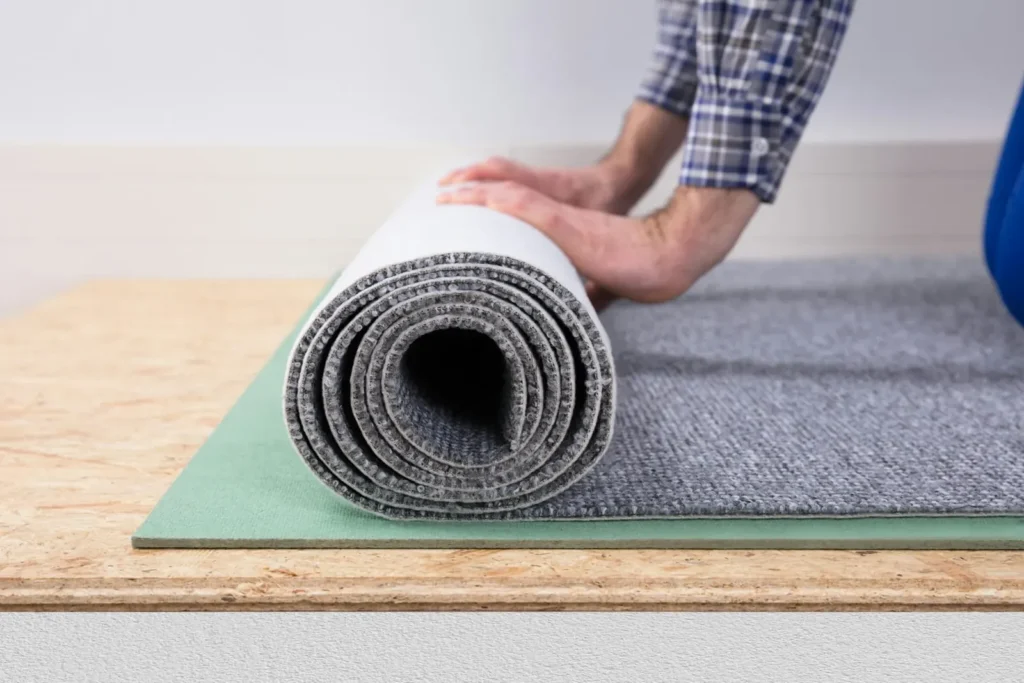
Commercial carpet tile is a practical flooring option for many offices, condominium common areas, retail spaces, and other commercial interiors in Calgary. It can simplify repairs, reduce installation disruption, and make it possible to replace damaged areas without replacing an entire carpeted floor.
But the quality of the finished floor depends on more than the carpet tile itself. Existing flooring, subfloor condition, moisture, layout, adhesive selection, traffic levels, furniture, and the requirements of the specific product all affect the installation.
This guide explains what building owners, property managers, office managers, and contractors should consider before installing commercial carpet tile in Calgary.
Key Takeaways
| Consideration | Why it matters |
|---|---|
| Existing floor | Old flooring may need removal or preparation before installation |
| Subfloor condition | Uneven, damaged, or contaminated substrates can affect the finished floor |
| Moisture | Concrete moisture and adhesive requirements need to be addressed before installation |
| Product selection | Fibre, construction, backing, traffic rating, and warranty requirements vary |
| Layout | Tile orientation and starting points affect appearance and material use |
| Occupied buildings | Phasing can reduce disruption to employees, residents, and customers |
| Maintenance | Individual tiles can often be replaced when localized damage occurs |
| Calgary conditions | Winter moisture, snow, salt, and tracked-in debris should be considered |
| Future repairs | Keeping replacement tiles from the original installation can make repairs easier |
Why Businesses Choose Carpet Tile
One of the main advantages of carpet tile is that it is a modular flooring system.
With broadloom carpet, a localized stain, burn, or damaged section can require cutting and patching a larger area. With carpet tile, an individual tile can often be removed and replaced.
That can be particularly useful in offices and other commercial environments where damage tends to occur in predictable areas, such as entrances, corridors, workstations, and locations around desks and chairs.
Other potential advantages include:
- Easier access to localized repairs
- Less material waste when only part of a floor needs replacement
- Flexible installation patterns
- Easier phasing in occupied buildings
- The ability to replace selected tiles rather than an entire carpeted area
- Easier storage of replacement material for future repairs
These benefits depend on the product and installation method. Carpet tile is not automatically the right solution for every commercial space.
The Installation Process
A professional installation normally starts well before the first tile is installed.
1. Site Measurement and Assessment
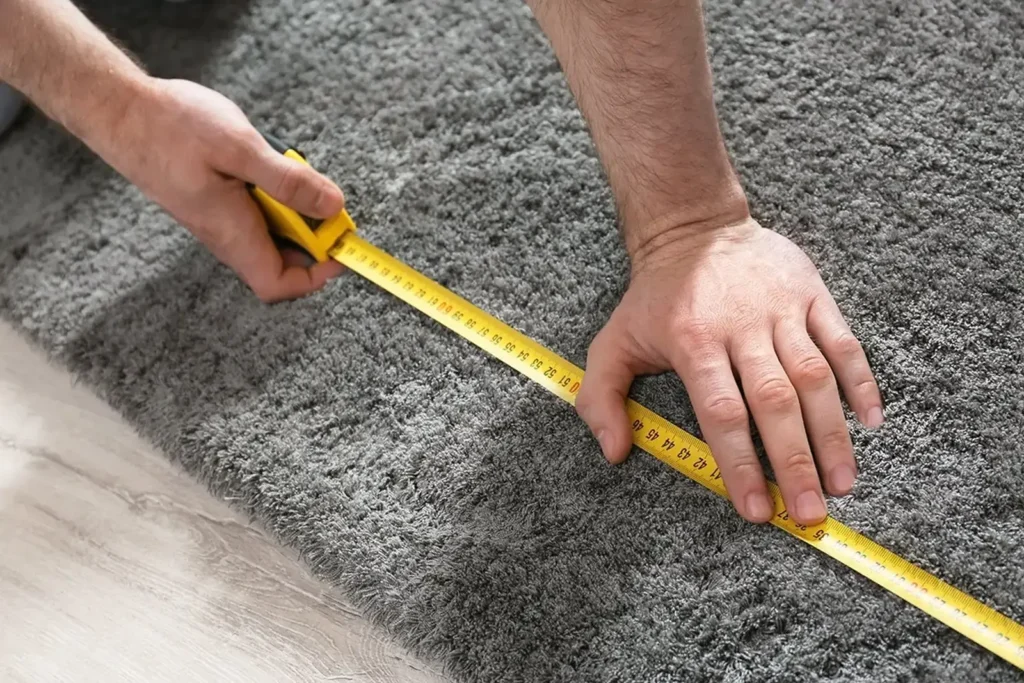
The first step is to measure the area and inspect the existing floor.
The installer should identify:
- Total square footage
- Rooms and corridors
- Doorways and transitions
- Existing flooring
- Floor height differences
- Areas requiring removal
- Baseboards or other items that may need adjustment
- Access restrictions
- Furniture and equipment that may need to be moved
- Any visible substrate damage
A site visit is important because the measured square footage is not always the same as the amount of material required. Layout, cuts, patterns, rooms, and waste all affect the order quantity.
2. Existing Flooring Removal
If existing carpet or another flooring material needs to be removed, the scope should identify what is being removed and what happens to the debris.
Removal may involve:
- Carpet
- Carpet tile
- Adhesive residue
- Underlayment
- Tack strips
- Other flooring materials
The condition of the substrate becomes much easier to assess once the existing flooring has been removed.
Older flooring should not simply be assumed to be safe to remove. If there is a possibility that existing materials contain asbestos or another hazardous material, appropriate assessment and procedures should be followed before disturbing them.
In Alberta, asbestos requirements are addressed through occupational health and safety rules, and the appropriate approach depends on the material and work being performed.
3. Subfloor Preparation
Carpet tile does not eliminate the need for proper subfloor preparation.
The substrate generally needs to be clean, dry, sound, and sufficiently smooth for the flooring system being installed.
Common preparation work can include:
- Removing loose adhesive
- Filling cracks or depressions
- Repairing damaged concrete
- Removing contaminants
- Grinding or mechanically preparing unsuitable areas
- Applying appropriate patching or levelling compounds
Small irregularities in the floor can become visible through the finished carpet tile, particularly with thinner or low-profile products.
This is why substrate preparation should be identified in the quotation rather than treated as an assumption.
4. Moisture and Environmental Conditions
Concrete floors can contain moisture that affects flooring adhesives and installation performance.
The appropriate moisture testing method and acceptable limits depend on the flooring system, adhesive, substrate, and manufacturer’s installation requirements.
Environmental conditions also matter. Carpet tile and adhesives should be installed within the conditions specified by the manufacturer. Requirements can vary between products, so there is no single temperature or conditioning period that applies to every carpet tile installation.
For a commercial project, the installer should follow the product’s current installation instructions rather than rely on a generic rule.
5. Layout and Tile Direction
Once the substrate is ready, the installer establishes the layout.
This is an important part of the installation because carpet tiles can be installed in different orientations depending on the product and desired appearance.
The layout should account for:
- Main entrances
- Corridors
- Doorways
- Room dimensions
- High-visibility areas
- Pattern direction
- Furniture
- Transitions to other flooring
The goal is not simply to start in the nearest corner. The starting point should produce a balanced layout and minimize awkward narrow cuts.
For patterned products, the installation instructions may also specify how tiles should be oriented or aligned.
6. Adhesive and Tile Installation
The adhesive system should be compatible with the carpet tile and substrate.
Depending on the product, installation may use pressure-sensitive adhesive, adhesive tabs, tackifier, or another approved system.
The installer should follow the adhesive manufacturer’s instructions for:
- Coverage
- Application
- Open time
- Flash time
- Working time
- Substrate requirements
- Cleaning
- Curing
Tiles are then installed according to the manufacturer’s recommended method.
Some products are designed to be installed in a specific direction, while others provide multiple installation options. Following those instructions is important for maintaining the intended appearance and warranty requirements.
Carpet Tile vs. Broadloom Carpet
Both carpet tile and broadloom carpet can work well in commercial environments. The appropriate choice depends on the building and how the space will be used.
| Factor | Carpet Tile | Broadloom Carpet |
|---|---|---|
| Localized repairs | Individual tiles can often be replaced | Repairs generally require patching |
| Installation | Can be easier to phase in some spaces | Large continuous sections can require more planning |
| Pattern options | Many modular patterns available | Wide range of patterns and colours |
| Waste | Can be efficient in some layouts | Cutting can produce more waste depending on the space |
| Seams | Seams occur between tiles | Fewer visible seams when properly installed |
| Future repairs | Matching replacement tiles can be stored | Matching carpet can be harder to source later |
| Appearance | Modular appearance may be intentional | Continuous appearance |
| Access floors | Often useful where access is required | Less convenient for repeated access |
Neither system is universally better. The choice should be based on the building, use of the space, maintenance requirements, appearance, and available products.
Installing Carpet Tile in Occupied Offices
Office installations often need to happen while employees continue working.
A project can sometimes be divided into phases rather than shutting down an entire floor.
For example, an installer may work:
- One department at a time
- One section of a floor at a time
- Outside regular business hours
- During scheduled office closures
- Around furniture-moving schedules
The right approach depends on access, furniture, building rules, elevator availability, and the amount of floor being replaced.
Before work begins, the scope should clarify who is responsible for moving desks, filing cabinets, electronics, and other equipment.
Rolling Office Chairs
Office chairs with casters create concentrated traffic around workstations.
When selecting carpet tile for an office, check the product’s suitability for rolling loads and castor-chair traffic rather than assuming every commercial carpet tile will perform the same way.
Product construction, backing, fibre, installation, and maintenance all affect performance.
Carpet Tile in Condominiums
Carpet tile can be used in condominium corridors, amenity spaces, common rooms, and other shared areas.
The important issue in a condominium is that the flooring work may be subject to building-specific requirements.
Before scheduling work, the property manager or board may need to confirm:
- Building access requirements
- Work-hour restrictions
- Elevator booking
- Loading and unloading procedures
- Protection of common areas
- Noise restrictions
- Contractor insurance requirements
- Waste-removal procedures
- Any required approvals
The applicable requirements depend on the condominium’s governing documents, management procedures, and the nature of the work.
For that reason, the installation plan should be confirmed with the property manager or condominium corporation before materials arrive.
Retail Carpet Tile Installation
Retail flooring has different requirements from a typical office.
A retail environment may experience:
- Heavy pedestrian traffic
- Shopping carts
- Frequent deliveries
- Dirt and salt tracked through entrances
- Frequent cleaning
- Concentrated wear at entrances and aisles
Product selection should therefore consider the manufacturer’s stated performance characteristics and the actual traffic conditions in the space.
Entrance areas deserve particular attention because they often receive more moisture, grit, and soil than the rest of the floor.
Calgary Winter Conditions
Calgary’s winter conditions can affect commercial flooring maintenance.
Snow, moisture, salt, and grit can be carried into a building through entrances and then distributed through corridors and high-traffic areas.
That does not mean a particular carpet tile will automatically fail in winter conditions. It means entrance design, matting, cleaning, and maintenance should be considered alongside the flooring product.
A commercial flooring plan may include:
- Appropriate entrance matting
- Regular vacuuming
- Prompt spot cleaning
- Seasonal maintenance procedures
- Replacement tiles for areas that experience localized damage
For high-traffic buildings, maintenance planning is part of the flooring decision rather than something to consider only after installation.
How to Choose the Right Carpet Tile
The appearance of a carpet tile is only one part of the selection process.
Before purchasing, review the product information for the intended application.
Fibre
Common commercial carpet fibres include nylon, polypropylene, and other fibre systems.
Each has different characteristics relating to durability, stain resistance, appearance retention, cleaning, and cost.
The manufacturer’s technical information should be reviewed rather than assuming one fibre is appropriate for every commercial application.
Construction
Carpet tiles may be manufactured using different construction methods, including tufted and other modular carpet constructions.
Construction affects appearance, texture, durability, and maintenance characteristics.
Backing
The backing system can affect dimensional stability, installation requirements, moisture considerations, and overall performance.
Traffic and Use
A carpet tile designed for a light commercial environment should not automatically be specified for a heavy-traffic application.
Consider:
- Number of occupants
- Frequency of foot traffic
- Rolling office chairs
- Carts or equipment
- Entrance exposure
- Cleaning frequency
- Potential spills
- Expected service life
Warranty
Read the actual warranty for the product being considered.
Pay attention to:
- Traffic classifications
- Installation requirements
- Maintenance requirements
- Exclusions
- Staining limitations
- Wear guarantees
- Conditions that could invalidate coverage
A flooring warranty is only useful if the product is installed and maintained according to its requirements.
When Carpet Tile May Not Be the Right Choice
Carpet tile is versatile, but it is not appropriate for every environment.
Another flooring system may be more suitable where a space has:
- Persistent water exposure
- Frequent wet cleaning
- Standing water
- Heavy loads beyond the product’s rating
- Specialized industrial requirements
- A requirement for a completely continuous carpet appearance
- Conditions outside the manufacturer’s approved installation environment
Stairs also require special consideration. Standard floor carpet tile should not simply be assumed to be suitable for stair applications. Purpose-designed stair products and installation methods may be required.
The correct flooring decision starts with the conditions of the space, not with the assumption that carpet tile is the answer.
Existing Concrete and Subfloor Problems
Many commercial flooring problems are actually substrate problems.
If the concrete is uneven, damaged, contaminated, or unsuitable for the adhesive system, installing new carpet tile over it does not solve the underlying issue.
Depending on the condition, preparation may involve patching, grinding, levelling, cleaning, or other corrective work.
This is one reason a site inspection can be more useful than pricing a project based only on square footage.
A quote should clearly distinguish between standard installation and additional substrate preparation when the condition of the floor is not yet known.
What About Asbestos?
Older commercial and residential buildings may contain asbestos in certain building materials.
The age of a building alone does not establish whether a particular flooring material contains asbestos.
If an existing flooring material is suspected of containing asbestos, it should be assessed and handled using the applicable Alberta requirements before it is disturbed.
Do not assume that old carpet, adhesive, vinyl flooring, or other materials are safe to remove simply because they are covered by another floor covering.
For renovation projects involving older buildings, asbestos assessment can be an important part of the pre-installation process.
Stairs and Transitions
Stairs require different installation considerations from standard flat flooring.
Depending on the project, the installer may need to address:
- Stair nosings
- Edge protection
- Adhesive requirements
- Pattern direction
- Safety requirements
- Transitions between carpet tile and other flooring
Transitions also matter at doorways and where carpet tile meets vinyl, tile, concrete, or other floor coverings.
A finished installation should not leave unexpected height differences or poorly secured edges.
Cost of Commercial Carpet Tile Installation in Calgary
There is no reliable single price per square foot for every commercial carpet tile installation.
Project cost depends on several variables, including:
- Carpet tile product
- Total square footage
- Removal of existing flooring
- Subfloor preparation
- Adhesive system
- Furniture moving
- Installation pattern
- Number of rooms
- Stairs
- Transitions
- Access and parking
- Elevator requirements
- Work-hour restrictions
- Phased installation
- Disposal
A small office with an accessible floor and minimal preparation can have a very different installation cost from a large occupied building requiring extensive removal and phased work.
When comparing quotes, look beyond the carpet tile price. Confirm what is included in the installation scope.
Questions to Ask About a Flooring Quote
A commercial flooring quote should make it reasonably clear:
- What flooring product is being supplied?
- What is the installed square footage?
- Is existing flooring removal included?
- Is disposal included?
- What level of subfloor preparation is included?
- What adhesive or installation system will be used?
- Are transitions included?
- Is furniture moving included?
- Are stairs included?
- Are evening or weekend hours included?
- Are taxes included?
- What is excluded from the price?
- What product warranty applies?
- What maintenance requirements apply?
Clear scope reduces the likelihood of unexpected costs once work begins.
Keep Replacement Tiles
One of the practical advantages of carpet tile is the ability to replace individual tiles.
That advantage becomes much more useful if replacement material is available when it is needed.
For commercial projects, it can be worth retaining unused tiles from the original installation rather than assuming the same colour, pattern, and dye lot will remain available indefinitely.
Store replacement material somewhere clean and dry, and keep the product information with it.
If a tile is damaged later, having the original product available can make a localized repair much simpler.
Maintenance After Installation
Commercial carpet tile still requires regular maintenance.
A typical maintenance program may include:
- Regular vacuuming
- Prompt treatment of spills
- Periodic deeper cleaning where appropriate
- Entrance mat maintenance
- Inspection of high-traffic areas
- Replacement of damaged tiles when necessary
The exact cleaning method should follow the carpet manufacturer’s recommendations.
Using the wrong cleaning method or chemical can affect the appearance and performance of the flooring and may affect warranty coverage.
What Building Owners Should Know Before Installation
The most important decisions happen before installation begins.
For a commercial carpet tile project in Calgary, confirm:
- The condition of the existing flooring
- Whether removal is required
- Whether the substrate needs preparation
- Whether moisture testing is required
- The intended traffic level
- Product suitability
- Installation pattern
- Building access requirements
- Furniture-moving responsibilities
- Work-hour restrictions
- Waste removal
- Future replacement material
- Maintenance requirements
A detailed site assessment can identify many of these issues before they become installation-day problems.
Frequently Asked Questions
How long does commercial carpet tile installation take?
The schedule depends on the size and condition of the space, the amount of flooring being removed, substrate preparation, furniture, access, and whether the building remains occupied.
A small open office can be very different from a multi-floor commercial project that must be completed in phases.
Can carpet tile be installed over existing flooring?
Sometimes, but it depends on the existing material, its condition, height, cleanliness, stability, and the installation requirements of the new flooring.
The manufacturer should approve the installation method before carpet tile is installed over another floor covering.
Can carpet tile be installed over concrete?
Yes, carpet tile is commonly installed over concrete when the substrate meets the requirements of the flooring and adhesive system.
The concrete may require cleaning, levelling, repair, moisture testing, or other preparation first.
Can carpet tile be installed in an occupied office?
Yes. Many commercial projects can be phased to reduce disruption.
The actual installation plan depends on furniture, access, working hours, employee schedules, and the amount of flooring being replaced.
Is carpet tile suitable for condominium hallways?
It can be, depending on the product and building requirements.
The property manager or condominium corporation should confirm access, working-hour, elevator, noise, insurance, and other building requirements before the project starts.
How often should commercial carpet tile be replaced?
There is no universal replacement schedule.
Service life depends on traffic, product construction, maintenance, installation quality, cleaning, and environmental conditions.
Can damaged carpet tiles be replaced individually?
Often, yes. That is one of the primary advantages of a modular carpet system.
The replacement tile needs to be compatible with the existing installation, and keeping material from the original project can make future repairs easier.
Planning a Commercial Carpet Tile Installation in Calgary
The best time to identify installation problems is before the flooring is ordered.
For an accurate commercial flooring estimate, provide the approximate square footage, building location, existing flooring, photos if available, and your preferred installation window.
A site assessment can then determine the actual removal, preparation, installation, and access requirements before the work is scheduled.
If you are planning carpet tile installation for an office, condominium, retail space, or other commercial property in Calgary, request a site assessment and an itemized quote that clearly separates flooring, preparation, installation, removal, and other project costs.